
If your annual salary is above 12 lakhs, you are likely in a higher tax bracket. Knowing how to save tax for salary above 12 lakhs is crucial to keep more of your hard‑earned money instead of paying more in income tax. With the right tax‑saving tools and smart planning, you can reduce your taxable income, lower your tax liability, and even grow your savings at the same time.
This article explains the best, practical ways to save tax for a 12‑lakh salary and beyond, using simple language and clear steps you can follow.
Why tax savings matter for 12‑lakh salary
When your salary is above 12 lakhs, income tax can feel heavy. At this income level, effective tax planning is no longer optional—it becomes a necessity.
Smart tax saving helps you:
- Reduce your taxable income under Section 80C, 80D, and other deductions.
- Lower your effective tax rate instead of paying more to the department.
- Build long‑term wealth through eligible investments like PPF, ELSS, NPS, and more.
- Avoid last‑minute rush and missed opportunities in the financial year.
Understanding tax calculation for 12 lakh salary will also help you plan better and choose the best tax‑saving options for salaried employees.
Know your tax bracket first
Before you plan how to save tax for salary above 12 lakhs, check which tax slab you fall into under the new tax regime (most salaried people use this now).
Here is a quick overview of tax slabs (approximate, subject to the latest budget changes):
Income Range (₹) | Tax Rate |
0 – 3,00,000 | Nil |
3,00,001 – 6,00,000 | 5% |
6,00,001 – 9,00,000 | 10% |
9,00,001 – 12,00,000 | 15% |
12,00,001 – 15,00,000 | 20% |
Above 15,00,000 | 30% |
A 12‑lakh salary is usually in the 15–20% effective tax band, depending on cess, surcharge, and deductions. If you can reduce taxable income close to or below 12 lakhs, you can often save several thousand rupees in tax every year.
Best tax saving options for salaried employees
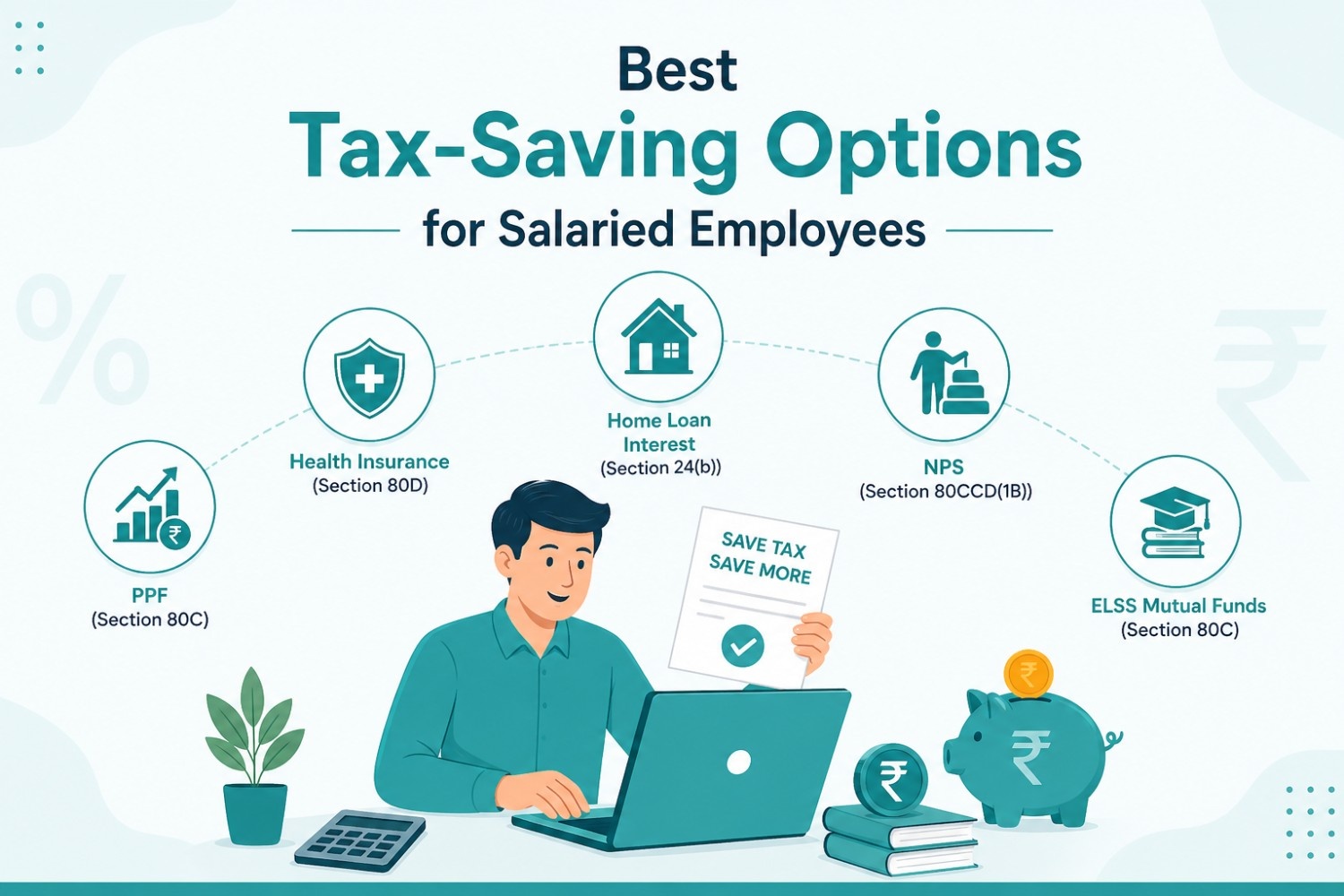
To know how to save tax for salary above 12 lakhs, start with the most popular and safe options under the Income Tax Act.
1. Use Section 80C deductions (up to ₹1.5 lakh)
Section 80C offers many ways to reduce taxable income. You can invest up to ₹1.5 lakh here.
Best options for salaried employees:
- EPF (Employee Provident Fund): Your monthly PF contribution is automatically eligible for 80C.
- PPF (Public Provident Fund): Safe, long‑term saving with interest and tax‑free maturity.
- ELSS (Equity Linked Savings Scheme): Tax‑saving mutual funds with 3‑year lock‑in but higher return potential.
- Life Insurance premiums on eligible plans (your own or spouse/children).
- Children’s tuition fees for up to 2 children.
- 5‑year tax‑saving fixed deposits with banks.
2. Save tax through Section 80D (Health insurance)
You can claim up to ₹25,000–₹75,000 under Section 80D, depending on age and dependents.
- Up to ₹25,000 for self, spouse, and children.
- Extra ₹25,000 for parents (if below 60).
- Extra ₹50,000 for senior citizen parents (60+).
This not only helps reduce tax liability but also builds health cover for your family.
3. HRA and rent for tax saving
If you are not living in your own house, you can claim House Rent Allowance (HRA) and also file rent receipts with your employer.
Key points:
- HRA is exempt from tax up to a certain limit (least of: actual HRA, 50% of basic for metro / 40% for non‑metro, or actual rent minus 10% of basic).
- If you live in a rented house, keep the rent receipts and PAN of the landlord (if rent > ₹50,000 per month).
- You can also claim home loan interest under Section 24 (up to ₹2 lakh per year) if you own a house.
4. NPS – Extra tax saving option
The National Pension System (NPS) under Section 80CCD(1B) allows an extra deduction of ₹50,000 beyond the usual 80C limit.
- Pushes your total tax saving above ₹1.5 lakh.
- Builds a retirement corpus with government‑backed security.
- Good option if you want long‑term tax saving for 12 lakhs salary and higher.
Step-by-step guide: How to save tax for salary above 12 lakhs
Follow this simple plan to design your tax strategy:
Step 1: Check your Form 16 and salary breakup
- Note your basic salary, HRA, special allowance, and other components.
- See what deductions your employer already uses (PF, 80C investments reported, etc.).
Step 2: Plan your 80C investments
- Decide how to split your ₹1.5 lakh 80C limit between:
- EPF (through your salary).
- PPF (₹50,000–75,000 per year).
- ELSS (₹25,000–50,000 per year).
Step 3: Buy or review health insurance
- Ensure at least one family health insurance policy.
- Add top‑up or critical illness cover if needed.
- Claim Section 80D with proper bills and policy details.
Step 4: Claim HRA and rent
- If you pay rent, submit rent receipts and landlord details to your HR.
- If you own a house, plan for home loan interest and property tax deductions.
Step 5: Use NPS for extra savings
- Open an NPS account (Tier‑I) and invest ₹50,000 per year.
- Claim an extra ₹50,000 deduction under 80CCD (1B).
Step 6: Save interest from savings accounts
- Use Section 80TTA/80TTB to claim up to ₹10,000 in interest deductions from savings accounts (if applicable).
Step 7: Declare all eligible deductions
- Submit proofs to your company on time.
- If you missed some, file ITR and claim missing deductions.
Common mistakes when saving tax on a 12‑lakh salary
Here are frequent errors people make:
- Delaying investments till March: Many wait till the last month, then buy unsuitable or low‑return options.
- Ignoring NPS and HRA: Missing out on extra ₹50,000 under NPS and HRA exemptions can cost you tax savings.
- Not updating declarations: New job, new rent, or new insurance? Not updating your employer cuts your real tax savings.
- Mixing tax saving with returns: Some buy expensive insurance or unknown schemes just for tax saving. Focus on safe lock-in, and returns, RNS too.
ALSO READ: TDS Section 194S of Income Tax Act
Tips and best practices for maximum savings
To really know how to save tax for a salary above 12 lakhs, keep these tips in mind:
- Plan early in the year: Start May–June, not March.
- Spread investments: Use PPF for safety, ELSS for growth, and NPS for extra deduction.
- Talk to a tax advisor: Experts such as KKS Capital Advisor can help you choose the right mix of tax savings for a 12 lakh salary and retirement planning.
- Review every year: Your salary, family, and liabilities change; your tax plan should also change.
- Use online tools: Many tax calculators help you see the tax calculation for a 12 lakh salary and how much you can save with each option.
Conclusion: Take smart action this year
Understanding how to save tax for a salary above 12 lakhs can make a big difference in how much you keep every year. By using Section 80C, 80D, HRA, NPS, and other legal deductions, you can lower your tax, build a safety net, and grow your wealth.
If you are not sure about the best mix for your income and goals, consult a qualified tax advisor or financial planner like KKS Capital Advisor and get a customized plan.
Got a 12‑lakh salary and higher? Start planning your tax‑saving investments this month instead of next March. Use this guide to create your own tax-saving checklist for salaried employees and keep more of your income legally and safely.