How to Check GST Registration Rejection Reason and Fix It Quickly
Getting registered for GST matters if a business wants to stay within legal boundaries while growing its presence. Yet, plenty stumble after submitting their request only to find it turned down without warning. At that point, many start searching for how to check the GST registration rejection reason, as work might stall, schedules shift, and clarity fades—especially when the message explaining why lacks detail or feels vague. The outcome is uncertainty at the very moment when momentum should be building.
Table of Contents
ToggleSteps on How to Check GST Registration Rejection Reason
If your GST application is rejected, the reason is shared on the GST portal itself. Follow these simple steps to find the exact cause of rejection.
Step 1: Open the GST Portal
Visit the official GST website and go to the homepage. Keep your TRN number ready before moving forward.
Step 2: Track Application Status
Click on Services, then select Registration, and choose Track Application Status from the menu.
Step 3: Enter Your TRN Number
Enter your TRN number in the given field and submit it. The portal will show the current status of your GST application.
Step 4: View Rejection Reason
If the status shows Rejected, click on it. The rejection reason will appear in the officer’s remarks or in the attached notice.
Step 5: Download the Rejection Notice
Download the rejection letter and read it carefully. This document explains what went wrong and helps you fix the issue before reapplying.
Understanding the rejection reason early helps you correct mistakes and avoid delays when submitting your GST application again.
GST Application Rejection: Why It Happens
One big thing people face? Their gst application rejection reasons get turned down. What makes it worse? Not knowing why. Sometimes there is no clear message, just a flat no. That leaves applicants stuck, wondering where things went wrong.
Fixing this starts with finding out the exact cause. The tax portal usually has details, buried in messages or status updates. Look closely at every notice linked to your file. Errors often hide in basic info like address proof or bank statements. Maybe numbers did not match up. Or the documents were blurry.
Another issue pops up when forms are filled inconsistently. One section says one thing, another contradicts it. System flags that fast. Then there are cases where nothing shows up—no reason given at all. In those moments, calling support helps. So does visiting an official help center. They might share what online tools won’t.
Once the real problem comes out, fixing it becomes possible. Clean copies, double-checked fields, and correct codes—all matter now. Resubmit only after each gap closes. Getting it right means less delay next time.
Understanding GST Application Rejection
Even when most steps happen online, small or big mistakes might still cause a request to be turned down. Learning the reasons behind those denials gives companies a clearer path to fix errors before trying again. Approval often follows faster once lessons from past attempts are applied.
Common GST Application Rejection Reasons
Mistakes or missing details in paperwork often lead to GST applications being turned down. Examples include using outdated forms, incorrect information, or files that do not match official records.
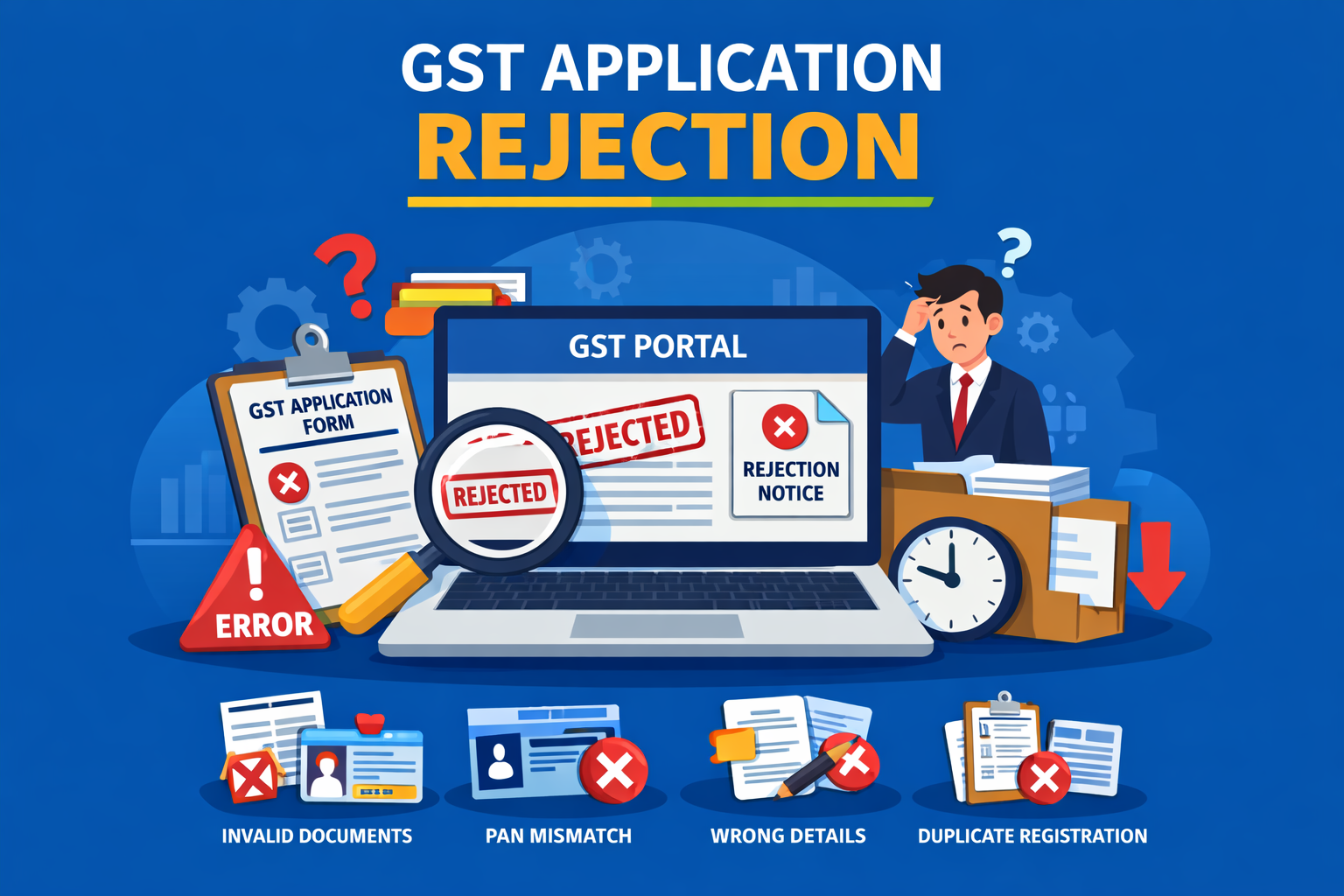
Incorrect PAN Details
When what’s on paper does not line up with the info given, problems can start. Mismatched data often leads to a decision that stops things from moving forward.
A slip in matching your PAN information with what you put on the GST form might get it turned down. Problems arise when names, birth dates, or the business setup do not align with tax records. Errors like these often lead to applications being refused.
One frequent cause of GST denial hits small owner-run firms hardest. Yet it shows up just as much in shared-business setups.
Invalid Address Proof
When the address shown isn’t legitimate, problems start. A working business location needs real documentation. Officials might say no if what’s submitted doesn’t hold up. Paperwork that fails verification gets set aside without approval.
Proof of where you live is different from what was filled out on the form
Not listed under who applied
Names on papers differ from the requester’s
Few folks lack the paperwork showing they rent here. Some never got a signature on file. Others lost their lease entirely. Without these pages, proof slips away fast.
Non-Response to Clarification Request
When you file your GST return, questions might come up. If an official asks for more details, they expect answers by a set date. Missing that deadline means your filing gets turned down—no second chances. Silence is treated as non-compliance. The system does not wait.
Failing to respond to a clarification request sinks plenty of applications. Missing that step often kills the chance outright.
Duplicate GST Registration Under Same PAN
A second try at GST registration could face refusal when one already exists under the same PAN. That happens if there is no solid justification behind submitting another. Same tax ID, fresh request—without proper cause—it often gets turned down.
Automated GST Application Rejection
A surprise hits many who face this automated reason for GST rejection. It comes from the system, not a person, leaving users puzzled.
Some people pick a signup option they are not allowed to use. Choosing the wrong kind of business structure might get an application turned down. Fitting the rules for voluntary enrollment prevents issues. One mistake in classification can block approval entirely.
Understanding the Rejection Notice
A word comes from the officer—short, without detail. It hangs there, simple on purpose. Not much to hold onto, just enough to move things along. Nothing hidden, nothing stretched out either.
A closer look at the rejection notice? Missing. The applicant skips details. Careful reading falls short. Attention slips away early. Pages get glanced over fast. Understanding stays incomplete. Key points go unnoticed. Errors hide in plain sight. Facts are missed quietly. Clarity never arrives.
It sits inside a file you can pull down. That’s where the explanation hides.
Though it might seem random, every GST rejection has a note logged inside the portal. What looks like chaos actually follows a trail of written records tucked away where few think to check.
Track Application Status
Now go to Application Status. Choose Track Application Status, then type in your TRN. From there, details will appear on screen. Wait a moment for the system to load everything. The page refreshes once you submit the number. Information shows up if the record exists. Sometimes it takes a few seconds longer than expected.
Open the rejection letter once it arrives. Grab a copy of the document explaining why things didn’t move forward. The note comes straight from the reviewing official.
Look closely at what the officer wrote. Their notes hold the precise cause behind your GST application being turned down. Hidden inside those comments or the linked document lies the full story.
Before trying again, it helps to know what was said. Getting clear on the feedback matters most the second time around.
How to Fix a Rejected GST Application
Fixing a rejected GST application starts with knowing why it got turned down. From there, moving forward feels less confusing. What matters most is tackling each issue one at a time.
Fix the mistakes first, then try again for GST registration. Getting it right matters most—no cost details are correct. Another attempt should only be made once everything checks out.
Can You Appeal a GST Rejection?
Yes, it is possible to challenge a GST denial. Most companies decide to submit a new application instead. Going through an appeal often takes too long. It only makes sense if the refusal happened even though every rule was followed correctly.
Resolving the problem first, then sending in a new form, usually works better for many people applying. Most find that it gets things moving more quickly than waiting around.
Impact of GST Rejection on Business
- GST rejection can:
- Delay invoicing
- Keep taxes under control. Stop people taking back tax they paid on supplies
- Affect vendor and customer trust
Fixing rejections fast matters because it keeps operations running without hiccups. A smooth process avoids delays that pile up later.
Conclusion
Start by reviewing your PAN and Aadhaar information carefully. Ensure every piece of data matches official records exactly. Submit only clear, readable copies when uploading files. Blurry images won’t be accepted—quality matters behind the scenes. Mistakes now might cause delays later without warning.
Stay on top of the GST website. Quick replies when officials ask questions matter to the KKS Capital Advisor.